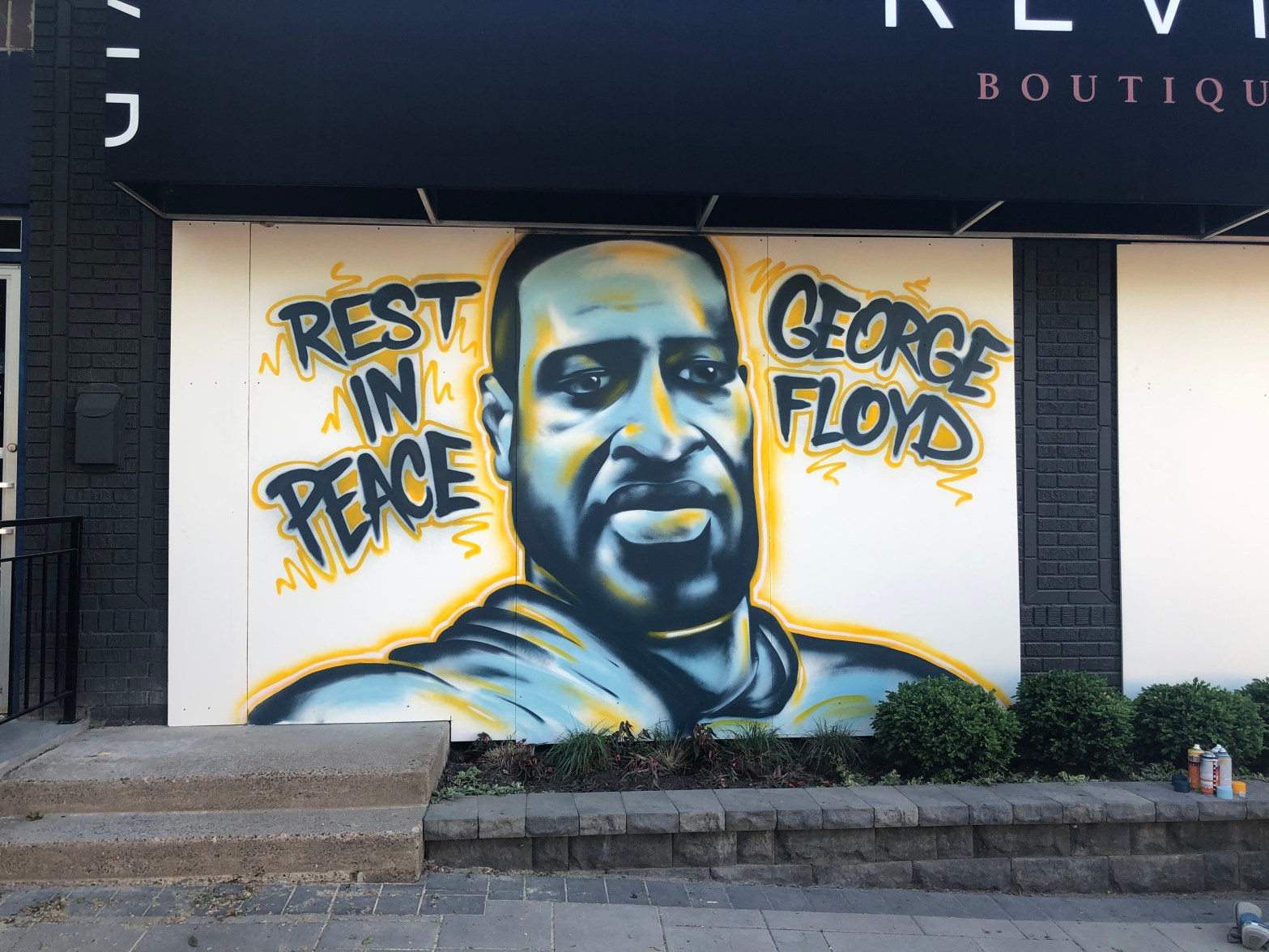
As a result of what is happening in my home state of Minnesota, it seems disingenuous to talk about Golf or honestly anything other than the racism that is permeating our country. On May 25th, 2020 George Floyd, a black man, was murdered by a police officer on video for the world to see. Floyd, was arrested for suspicion of forgery, put into handcuffs and for reasons we do not understand, thrown on the ground where former Officer Chauvin forcefully planted his knee down on Floyd’s neck. The 8 minute long video shows Chauvin choking Floyd (who is in handcuffs and already detained by police) who pleads “I can’t breathe” and bystanders who are trying to intervene. Due to police interference, the bystanders are helpless and watch as Floyd’s pleads fade into unconsciousness and eventually his death.
This horrible atrocity represents a lot that is wrong in America when it comes to handling issues of race and treating people of color differently in America. The many facets of this include police discrimination, discrimination of jobs, discrimination of jail sentenances and so much more. While Golf is not as important as those topics, golf is in fact an avenue in which racism moves in America. So I want to talk about the uncomfortable situation that race plays in golf today. Before we get started, this is just a blog post to curate some facts about this issue and inspire conversation to happen. This is by no means a complete comprehensive list of the issues and reasons of why golf is so limited to people of color.
In 2018 at the PGA Championship (Bellerive Golf Course) there were 156 participants playing the event. Of the 156 golfers in the field, only one of them was “not white” and that golfer was Tiger Woods. Obviously this is just one event that we are looking at but if you look at more events in 2018, you will see that usually 1% of any PGA Tour event is people of color. In a tweet from Daniel Rapaport, 3% of recreational golfers are black. That is a staggeringly low number given that there are an estimated 77 million recreational golfers in America.
However, why this disparity exists is no mystery, there are lots of socio-economic reasons and even institutional reasons why it is difficult for people of color to get into golf. In terms of the economic barriers to golf, Harnold Varner III, a black PGA Tour golfer, said it best, “Why would I spend $30 a day to play golf when I can spend 30 bucks a month and go to the ‘Y’ and play basketball? It’s hard to get out on a golf course when you’re a kid with no money.” Money is obviously a big hurdle for getting into golf, it is actually something I have briefly written about on this very blog. It is a sport that requires certain clothing which costs money, money to practice (driving range), expensive equipment (clubs and balls), and even money to play. In America, the average black income is %73 percent of that of the average white income. For simple math, if a white family makes 100,000 then you can expect a black person to make 73,000. However, the average household income for families annually is 55,000 in America and %73 of that is 40,150. That amount of money is not a salary that is conducive to playing golf. If you were to play 1 round a week for 5 months at $30 bucks a round, that equates to about %2 of an black families annual income. In addition to that, there would need to be money for proper clothes required to play some courses as well as the cost of equipment. Spending 3-5% of your income when it is so low to begin with, is not viable for anyone. A brief summary, black people are less likely to make more money in America and therefore less likely to have the resources to golf in America.
Aside from the economic issues that face black people from learning and taking up golf, there is the long history of systematic racism that runs deep in country clubs and golf clubs in America. The first black person to play in the US Open was 1948, the first black person to be on the PGA Tour was 1961 which was allowed when the tour abolished its “Caucasian only” policy, and the first black person to play at the Masters was 1975. This was less than 50 years ago! This culture is still influencing the game to this day. I feel I need to say no more regarding the culture of golf so I will let Tiger Woods wrap up this point.
So what can we do as the golfing community? There are a lot of things that can be done but I will propose 2 points of action. 1. Just love your neighbor, regardless of ethnicity, race or religion. People of color need to know that they are loved and we need to make them feel welcomed and safe. 2. Donate to the First Tee. The First Tee’s mission statement is as follows “To impact the lives of young people by providing educational programs that build character and instill life-enhancing values through the game of golf.” A lot of times for people of color, this is how they are exposed to the game and can set them up for a lifetime of love for golf.
As stated earlier in this post, this is by no means a comprehensive list of issues that plague people of color from playing golf, but it is a conversation starter to help make the golfing community more aware of this issue that we face. While there are larger issues and institutions of which racism exists, the battle cannot be won until all institutions are scrubbed of this hate and golf is no different.
I want to thank Wikipedia, PGA of America, and the IRS for the minor information and quotes that I put into this brief post. An even bigger thanks to my friend Tim for the picture and mural of the late George Floyd. Show him some love on instagram (@twest332). If you liked what you read, please consider subscribing to the blog and following me on social media @aspoiledwalk (Instagram, Twitter, and Tiktok). I hope this post has paved the way for conversation, thinking and learning for you and the entire golf community.
Love one another.
 A Good Walk Spoiled