AGWS 27 – Observations from the Women’s U.S. Open Qualifier: Somerset CC – Minnesota

After having to postpone the event to December in 2020 due to the Covid19 Pandemic, the 2021 US Women’s Open is back to its rightful place in the calendar and this year it will take place June 3rd to June 6th. The site for the event this year is the historic Olympic Club, in San Francisco, California. Located on the west side of the city and just across Lake Merced from Harding Park, this 36 Hole complex boasts a Willy Watson design that was completed in 1924 after it bought the land from Lakeside Golf Club in 1918. The club held its first U.S. Open in 1955 where Jack Fleck edged out Ben Hogan in a playoff and most recently it hosted the 2012 U.S. Open who was famously won by the Birdman… errr, um, I mean Webb Simpson.
There are numerous sports tournaments such as the Stanley Cup Playoff and The Champions League in soccer but the U.S. Open remains a special event. Why? Because it is open to anyone, it is in the name of the event. Typically in sports, to play in the best tournaments you need to be young, in prime physical shape and also be on a roster. As a white male quickly approaching 30, it is safe to say that my childhood dream of playing in the NBA will never happen. I lack the youth, the physical size and years at desk job has put me way behind on Cardio and Muscle training. However, as a white male quickly approaching 30, I can still have the childhood dream of playing in the U.S. Open. The dream to be teeing it up against the best players in the sport, while the world watches as players compete over 72 holes for the coveted U.S. Open Trophy (which has never been named over all of these years).
The way that one makes it to the U.S. Open is through regional qualifiers. These qualifiers might be the most interesting competitions in golf. You have professionals from the LPGA/PGA Tour in groups with college phenoms, Club Professionals, and scratch golfers all trying to grab one of the limited spots available to play in the U.S. Open. And don’t let the name “regional qualifier” confuse you, these events are anything but regional as people travel internationally and from across the country to try and qualify for the prestigious US Open.
This year for the Womens U.S. Open, there was a qualifier at a course a mile from my house and it also happens to be the course that I started caddying at 15 years ago. The course is Somerset Country Club, a Seth Raynor design that opened in 1919 and has been a staple in the upper echelons of Minnesota golf since. I wanted to spectate for two reasons.
1. I wanted to see elite talent in the world of golf. Like I said earlier, there are people from all walks of life in these events but make no mistake, all of these ladies can play golf.
2. As someone who has walked the courses thousands of times and could tell you which way putts broke with my eyes closed, I wanted to see how Golden Age Seth Raynor could hold up to the best of the best in the modern game.
My Observations:
My time spectating unfortunately did not start until 2:30 PM as the event was on a Monday and I had to work. Upon arrival, all of the field was already out for their second 18 holes of the day. The event was a 36 hole event and consisted of 36 women fighting for just two spots and two alternates. After checking in at the club house and seeing the pairings, I walked my way out to behind 7 green. The 7th hole is Raynor’s Redan template and from that green you are able to see all of the 10th hole, the 8th, the 9th and of course the 7th hole. Being able to see 4 holes without moving was a great way to take in the first hour or so of spectating. I was able to watch multiple ladies hit their tee shots in the 7th and It was amazing watching how they all had different approaches to conquer the challenge that Raynor placed in front of them. After watching several groups cycle through the 7th hole and hit their tee ball on the 8th hole, I decided the next group off of the 10th tee, I would follow for the entire back 9. One thing that I think that gets lost on a TV Broadcast is how the top talent in the game puts together a round of golf. Rarely will a broadcast show a bad shot and rarely will they even show an average shot and I think everyone looking to improve as a golfer can learn from these players. It is what they do after they hit shots that are below their standard of excellence and how the recover.
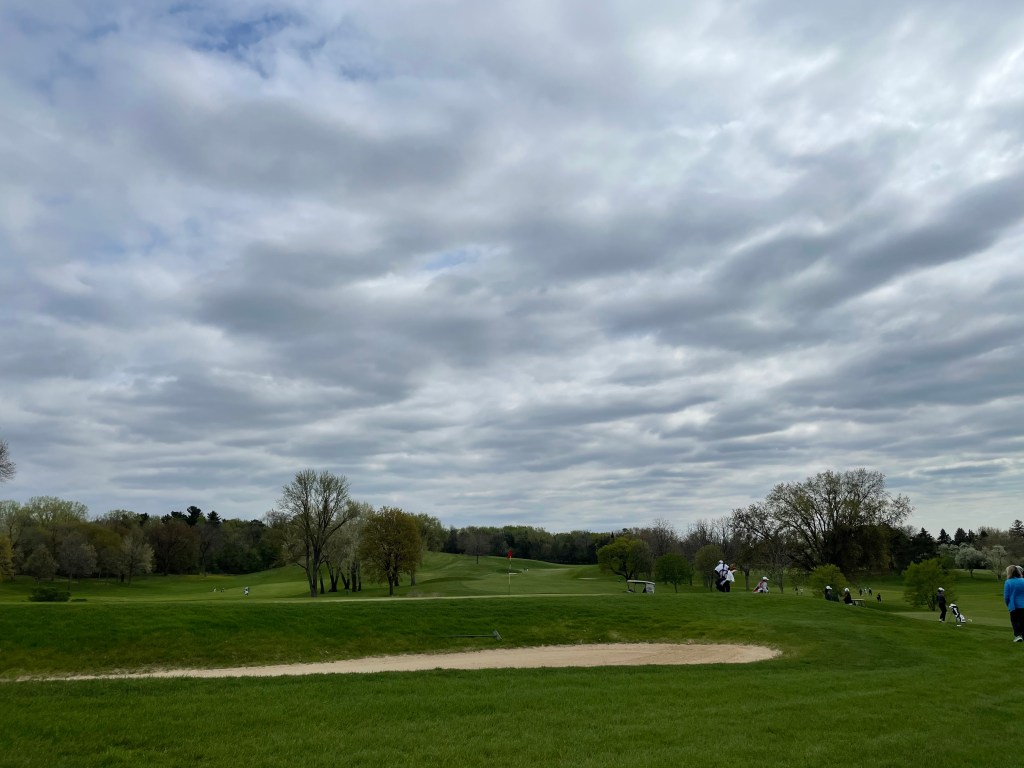
The group that I got to follow turned out to be the perfect group to follow. The first lady in the group was Isabella Holpfer, a freshman at the University of Georgia. This Austrian has been ranked as high as 25 in the World Amateur Golf Rankings (WAGR) and won the 2018 English Women’s Amateur. The second lady in the group was Taglao Jeeravivitaporn. As a junior at Iowa State University, this Thailand native is currently the 143rd ranked amateur in the nation (according to Golf Week) and boasted a stroke average of 73.00 in the 2020 season. Finally, the local phenom, Isabella “Bella” McCauley. The junior at a local high school was fresh off setting a course record at Loggers Trail (Stillwater, MN) and looking for more by punching her ticket to the U.S. Open. After a tough front 9 in her second round, McCauley found herself 3 shots outside of second place which was the final spot for getting a U.S. Open invitation.
One thing that made this group stand out from the rest was the small gallery that was surrounding the group. Holpfer had a group of 3-6 fans supporting her, McCauley had a verbal posse of friends and family and myself being a former Cyclone, I had to support Taglao (note: being a Minnesotan, I was cheering for Bella as well). All and all there were about 15-20 people following this group and it was exciting. Personally, due to the pandemic, I haven’t been to an in person sporting event in over a calendar year and even a crowd of 20 people was enough for me to feel the energy and importance of the golf being played.
After the first two holes of watching, the energy that I felt walking down the 10th fairway surrounding this group quickly evaporated with some bogeys and double bogeys due to some of the ladies being short sided on greens 10 and 11. Somerset is a shorter course and to hold up to the standard of today’s modern game, the green complexes are intricate and the course flexed on a couple of the ladies in the early part of the back 9. However it was the next hole where the fireworks began and some awesome golf started to unfold. The 12th hole started with Taglao murdering her drive well over 280 and it ended with Bella, the local high school standout, holing out for Eagle from just inside 70 yards. When the eagle shot dropped, the crowd erupted and I later heard reports that the roar could be heard just about everywhere on the property.
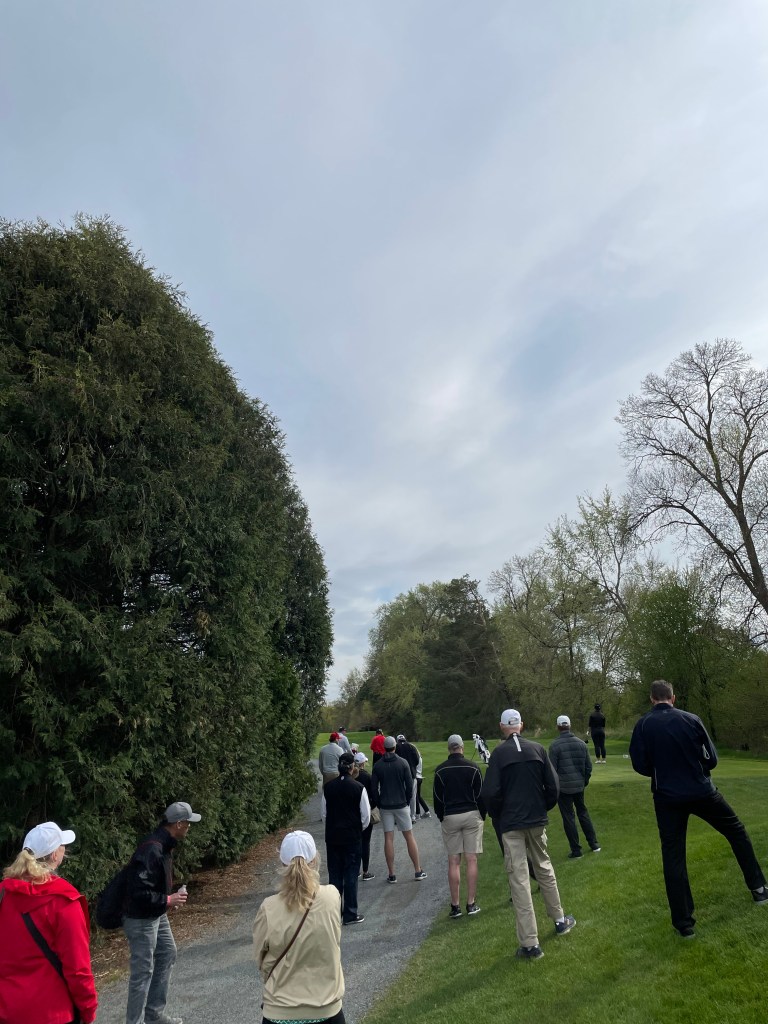
At this point everyone in the group knew what was possible. The growing reality that there was a chance that this high schooler, McCauley, could make the U.S. Open. She was just 1 shot out of solo second. This initial enthusiasm was quickly quelled by a sloppy bogey on 12 after a shorting an approach shot and a chip that seemed to bite more than she anticipated. However, like any good athlete, she bounced on the 210 yard par 3 15th Hole with another birdie that she walked in which again, sent the small crowd into a roar. Entering the 17th hole, Bella was tied for second place which meant playing the last two in one under would almost certainly punch her ticket to San Francisco next month. After walking in yet another birdie putt at the 17th hole from just off the back fringe (too much sauce!), McCauley sent her drive straight down the middle of the 18th fairway. Playing straight into a steady northwest wind that permeated the entire round, she hit 3 wood to the back of the green. After a less than desirable putt, she was looking at what appeared to be a 6 or 7 foot putt to retain solo second. After painstakingly reading the putt, consulting with her coach (who was caddying for her) and going through her pre shot routine, she lined up the putt. After she stood over the ball in her stance for what seemed like an eternity (but was probably closer to 10 seconds) she backed off and reset the whole process. Shaking off of the nerves, she stepped up and buried the putt with fellow competitors watching in hopes of a potential playoff. Bella shot a final 9 33 to finish solo second, one shot behind LPGA professional Sarah Burnham who finished Top 30 last month in the LA Open. Congrats to Sarah Burnham and Isabella McCauley!
Final Thoughts:
- What an awesome event! The U.S. Open Qualifiers display some of the best talent in the world and they are completely free with no ropes. You are free to walk around the course as you please (barring you aren’t holding up play or being a distraction) or can just camp out at a hole and watch the different approaches that different players take to the same hole. Not sure there is any better way to spend a beautiful Minnesota Spring day.
- These Women ARE worth watching. I was fortunate to follow around a stellar group which contained McCauley and Jeeravivitaporn who finished 2nd and 6th respectively but it is the little things that all of these ladies do that go unnoticed that make them worth watching. The amount of impressive two putts for par, the unassuming safe play to the middle of a green or how Bella stepped off of her clutch putt are “plays” that do not get a lot of attention but are mad impressive and cannot be overlooked. This event was a personal conviction that I need to watch more LPGA golf than I already do and make a conscious effort to seek out the leaderboard if I am unable to watch.
- While I will remember this event mainly by watching Bella McCauley shoot 33 to make the U.S. Open, I would be remiss if I did not give another shoutout to Jeeravivitaporn. Finish T6 at U.S. Open Qualifier is an accomplishment, especially when you do not have your A game. She was grinding out pars and her ability to hit driver kept her afloat and I appreciated watching someone put together a round when it clearly wasn’t their day. She also gave me her ball after the round, Shoutout to Ms. Jeeravivitaporn.
- Golf is a wild game. What other sport do you get to see a Junior in High School and a professional in the sports highest league square off and have the same success? I can not wait to watch Sarah and Isabella next month in the U.S. Open.
AGWS 26 – The Southeast Road Trip
Hello Everyone! It has been awhile since I wrote and posted a blog in awhile. Recently I just got back from a Golf Trip to the Southeast United States and made a vlog series out of it. The 3 part series explores 3 different states and I hope you enjoy it. Check out the first video here and please like and subscribe to the YouTube channel for future videos.
AGWS 25 – My Top 3 Golf Purchases
In Golf, there are lots of different purchases to be made. There is golf equipment such as the club and the ball, which offer hope of improvement given the wide variety of performance available. There is clothing and soft goods such as clothing, bags and head covers which offer you to put your personal style on your game. Finally you have accessories which offer enjoyment experience or offer a convince that you previously lacked while golfing. There is without a doubt a saturation of golf products in the world that makes buying anything, an overwhelming experience. I thought that I would provide 3 of my best purchases in an effort to cut through all of the noise that the general golf market may throw at you. I am not saying that you all need to buy these products but hopefully, these products give you ideas of what to buy, what qualities to look for and why to buy them in the first place.
Ping Hoofer Bag: I grew up caddying for 10 years of my life so it goes without saying that I have carried a lot of golf bags. I have carried every kind like Titliest bags, Callaway, Ogio, Sun Mountain, MacKenzie, Nike, Taylormade, cart bags, sunday bags and even old leather bags from the 80s. Of all of the bags that I have carried, Ping bags have always been my favorite for a multitude of reasons. As a caddy who was double bagging most of the time, I enjoyed the linear straps on a Ping Golf bag that allowed for me to wear that bag on either my left or right should. In the Mid 2000s through the early 2010s, there was (and still is to an extent) a trend of having rounded bag straps to better fit peoples shoulders. These bags were a caddies’ worst nightmare and some of these brands still carry some scar tissue in my head. In addition to the linear straps, the Ping Hoofer has plenty of storage. There are multiple small pockets for items such as balls and snacks and even larger pockets that can hold an extra jacket. There are also specialty pockets for items like water bottles, umbrellas and even a valuables pocket. All of these pockets are hung on a lightweight frame which weighs in at under 4 pounds which is astonishing for a stand bag. As someone who religiously walks (a blog post for another time) when playing golf, this bag is a must have given all of the amenities it offers in a light, comfortable and compact package.
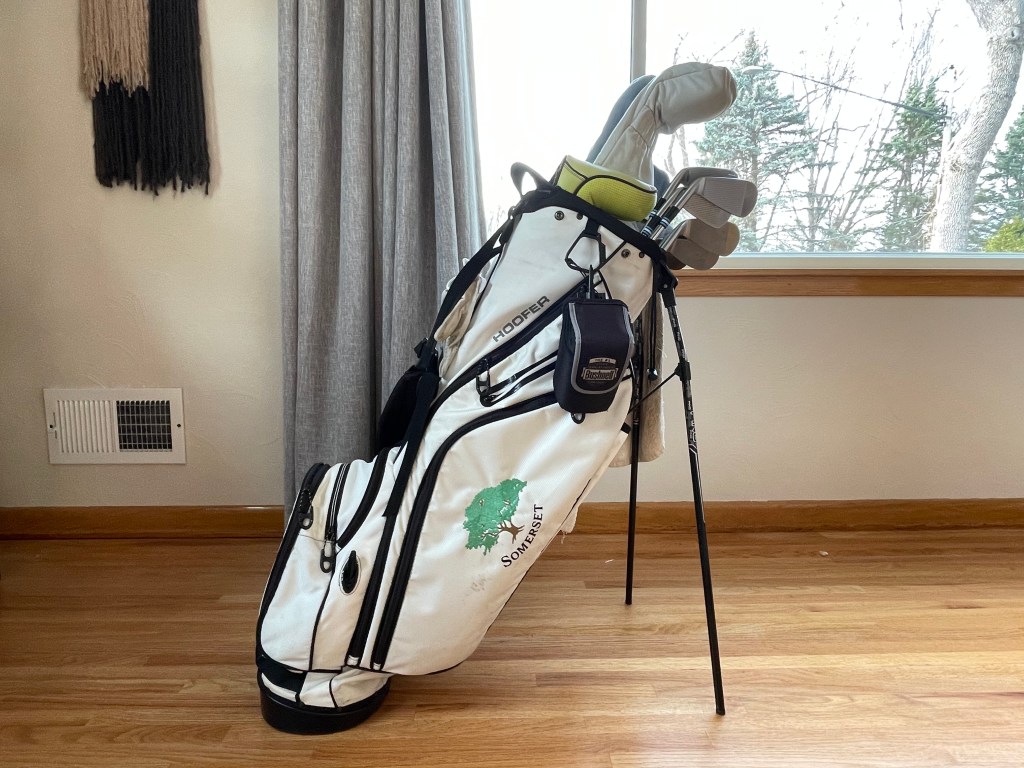
Now all of the features listed above certainly are nice but they aren’t even close to being the favorite feature on the Ping Hoofer Golf Bag. The best feature in my mind is the handle at the brim of the bag that runs along the spine (See Below Image). Back when I bought this bag, this was one of a couple, if not, the only bag implementing this handle design. Since then, many wise manufacturers have followed suite and put this design into practice. This handle can be used as a substitute for the awkward handle along the spine of a lot of bags that turn your portable golf bag into a clunky unbalanced “suitcase”. Additionally this handle is great to hold and make your bag vertical when you are removing a club which if you didn’t know, holding/rattling your bag vertically is the trick to making clubs “unstick” if you are having a tough time removing a wedge.
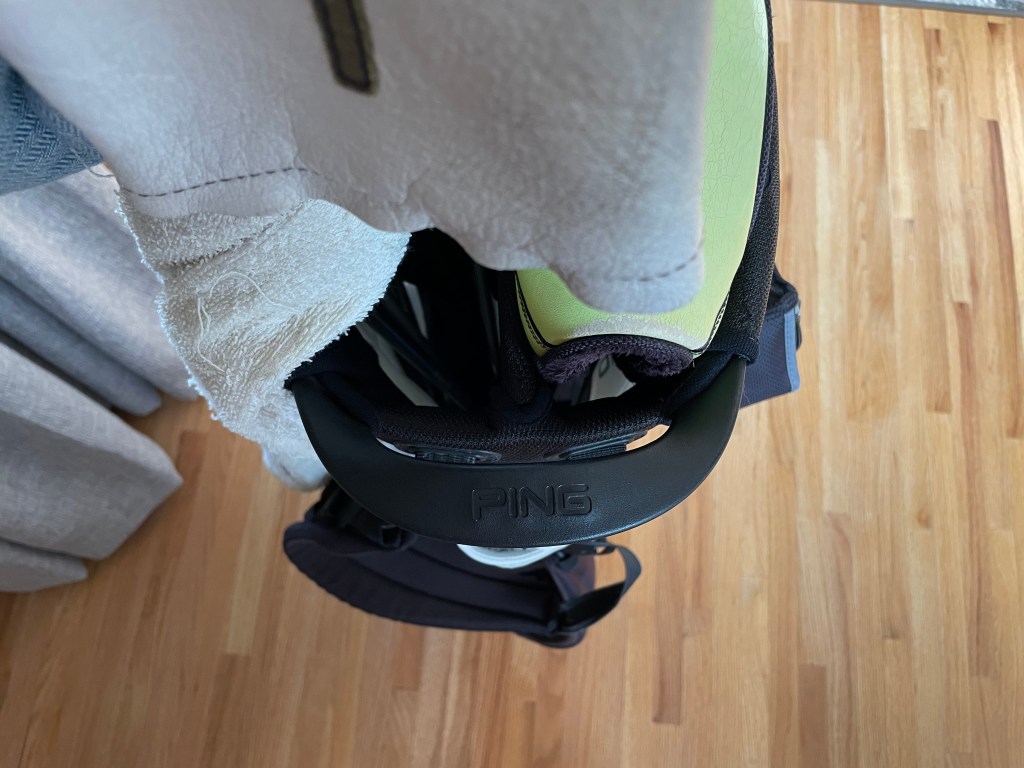
Hopefully reading this explanation helps you understand my affinity for this bag and its well engineered design. Add to the bag the logo of the club I have worked at for 15 years and you have one of my top 3 golf purchases of all time.
Before we move on from bags, I want to give an honorary shoutout to the Jones Carry bag that I purchased this summer. The light, single strapped design is ideal for a quick round and it is perfect for holding the minimal amount of items (A sleeve of balls, a water bottle and some tees). I got this bag for a low $60 during the Blind Draw. Every once in a while, Jones sells the bags that have slight defects at an extremely reduced rate. I look forward to using this bag more next summer.
Bushnell Laser: Now the title of this blog post is my Top 3 Golf Purchases so I must confess, this one I cheated a bit. My grandfather, who taught me how to golf, has had this Bushnell laser tethered to his bag for at least 10 years and this year I was attempting to qualify for a tournament or two and asked him if I could borrow his laser. He informed me that it was broken but if I could fix it, he would let me keep it since he only uses his Garmin watch. After undoing a screw and a trip to Walgreens for a battery, I had that thing up and running in no time. So technically I did not Purchase this item but I am putting it on the list anyways because it is that important to my golf game.
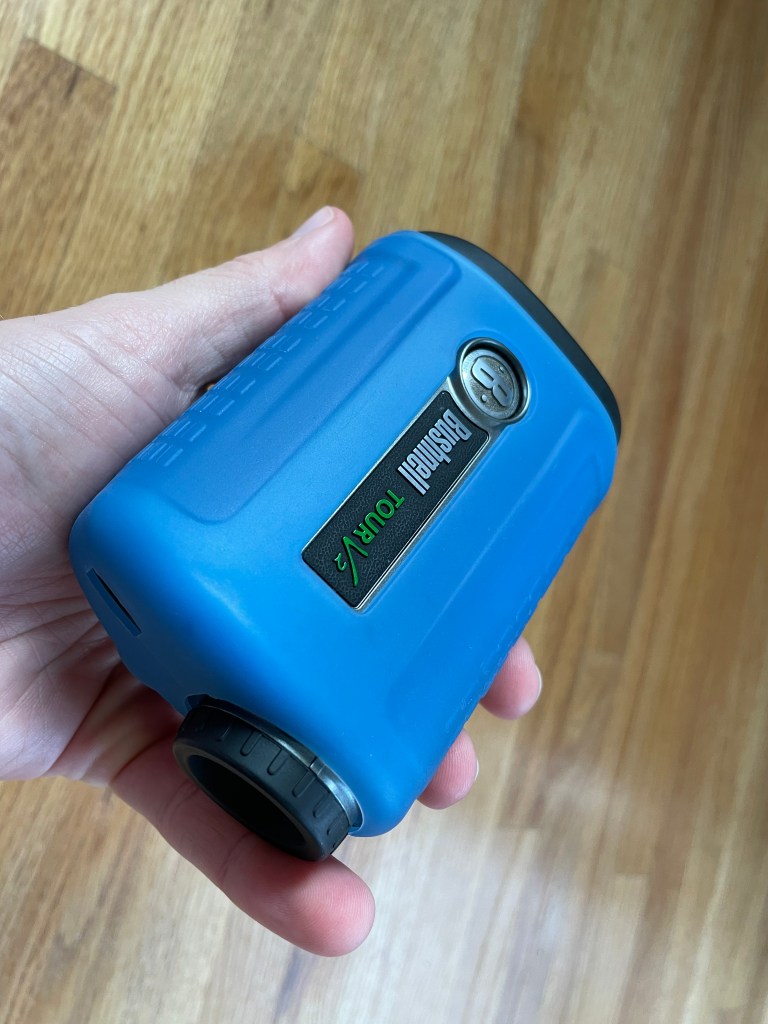
Realistically in the short term, this laser has only shaved off about a half of a stroke off of my game. Prior to owning it, I had no problem walking off yardages from sprinkler heads or asking my buddy what his phone application was reading at the time. However going forward, I expect this thing to improve my wedge game. When I used to be inside of 100 yards, I would estimate the distance and play strictly off of feel. Now with the laser, after I hit successful feel shots, I am using the laser to verify the distance that I hit it. Over the course of this summer, I have been able to assign yardages to certain feel shots which I think will improve me as a player in the years to come.
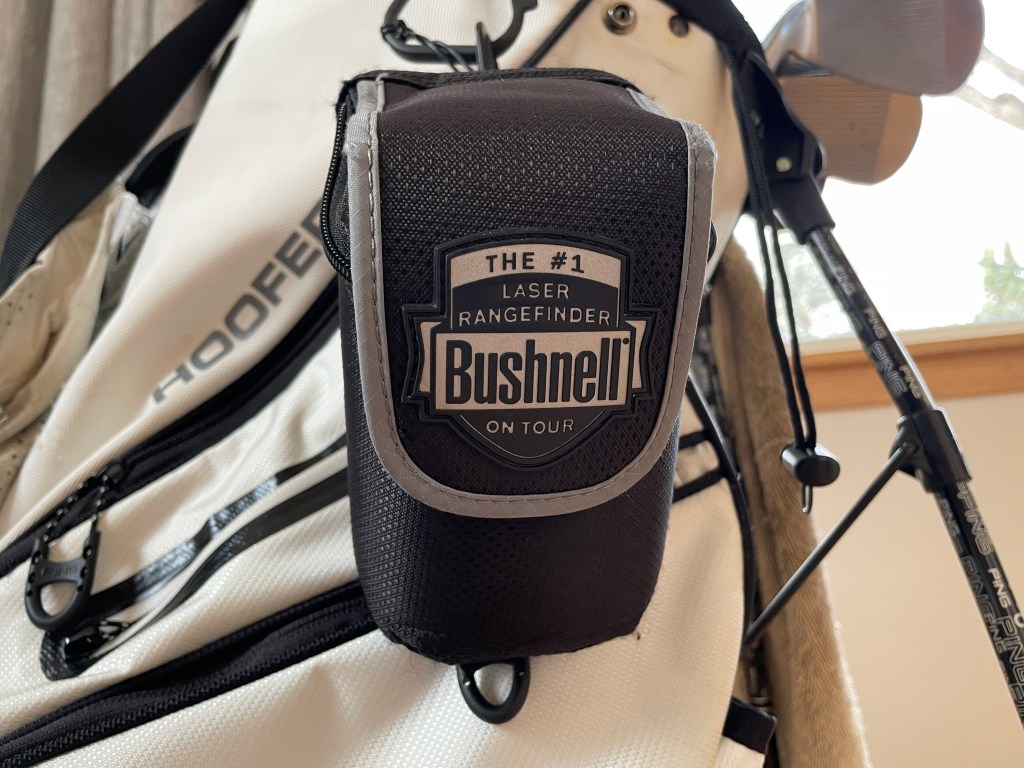
I used this laser so much that towards the end of the summer, the battery died on me in the middle of a round. This was the ultimate personification of the cliche “you never know what you have until it’s gone” because without this laser, I felt like I was unable to play golf. It was hard to believe that prior to owning this device that I just estimated my distances based off of where the 150 yard marker was. I felt rushed during that round as I scrambled to find distance markers and was constantly between clubs without knowing the distance. I use it not only for shooting pins but for bunkers on tee shots, trees that could be issues or even pick targets for laying up. At this point, I would consider this device essential to not only my golf game but my golfing experience which is why I had to include my Bushnell Laser on this list.
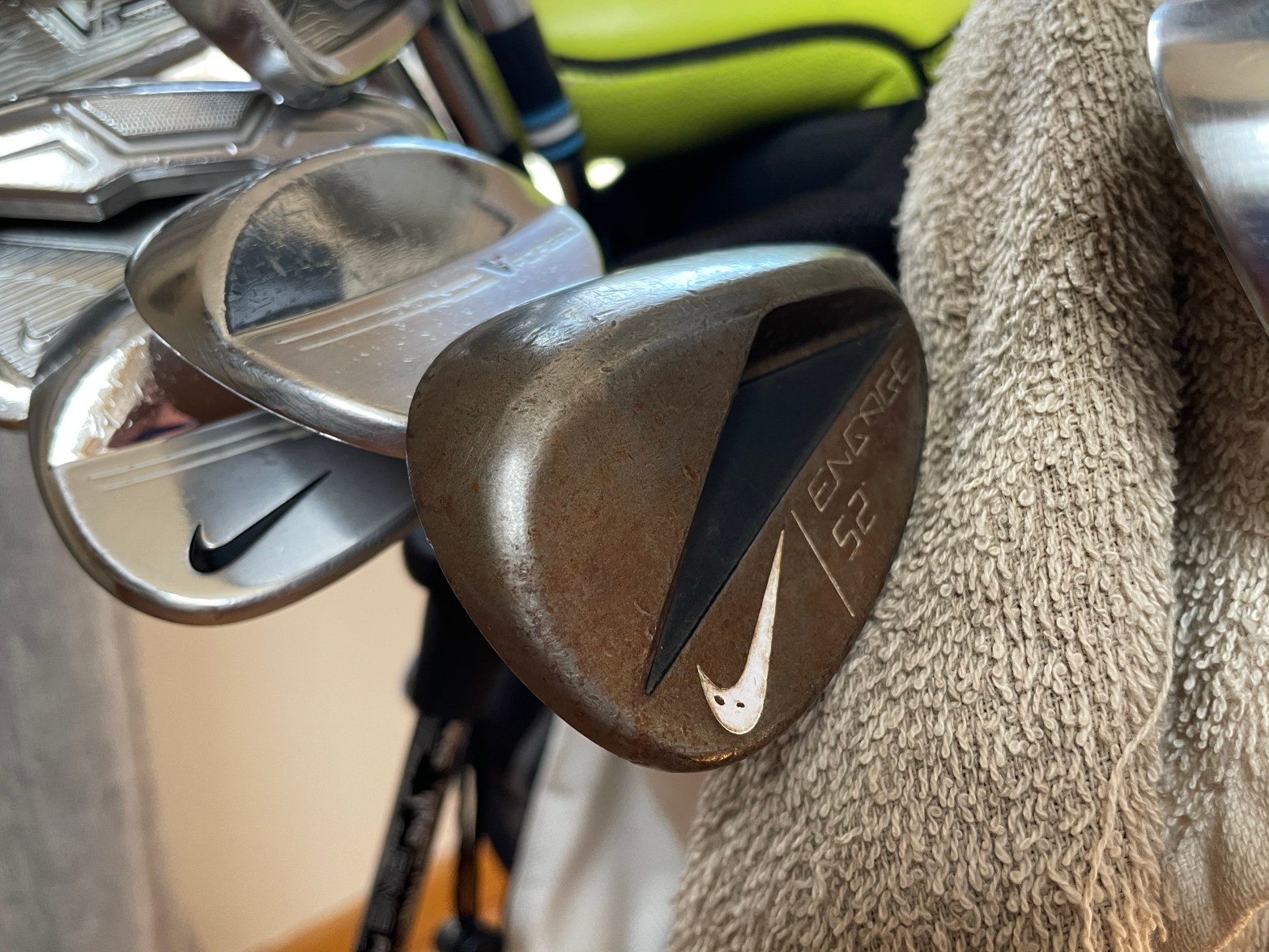
Nike Engage Wedge: To the disgust of the general golfing community, most of the clubs in my bag are Nike clubs. Part of that is because I genuinely really like the clubs and part of it is the name Nike and the brand loyalty that I have been trying to shake forever. I grew up playing basketball where how cool your shoes were, mattered immensely and Nikes, were as cool as they got. That sense of swagger and commitment to Nike carried over into golf clubs for me and I have been thankful to find clubs that perform well with my swing. None of the clubs in my bag perform as well as my 52 Degree Nike Engage Wedge.
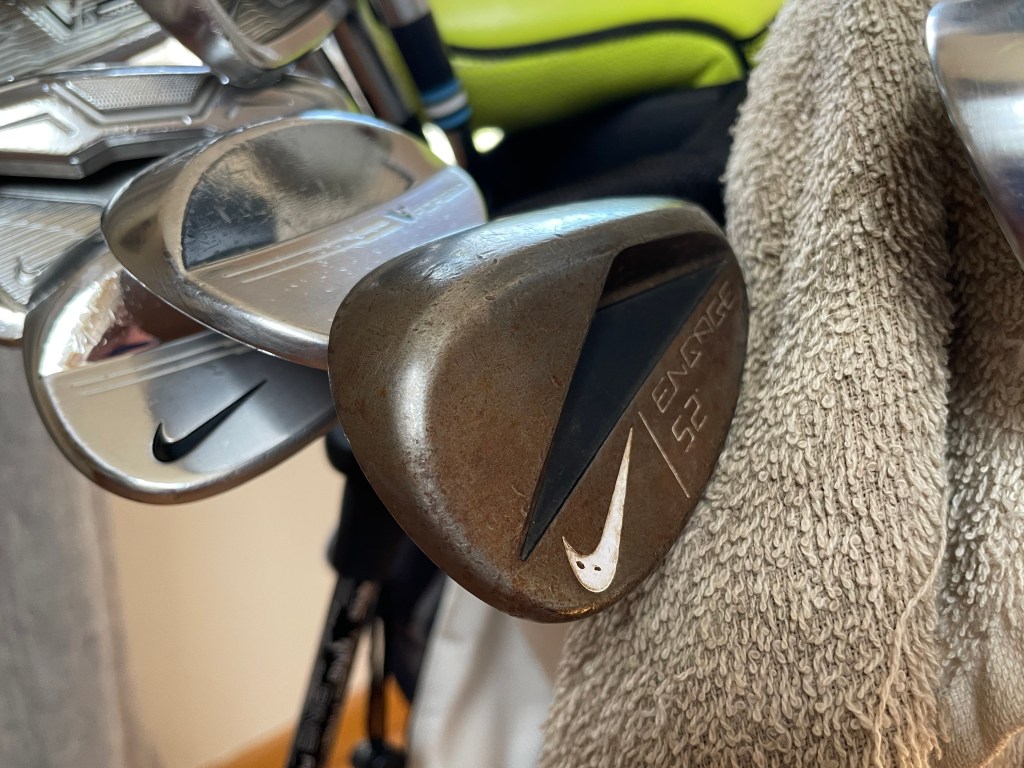
I originally found this wedge in a “bargain barrel” at a local used golf equipment store called Second Swing. I was in search of a solid 52 degree wedge at the time and I wanted to get fitted. However, when I saw this wedge, I saw the insanely low clearance price of $48 next to the swoosh and I decided it was the club for me. Little did I know that I would be purchasing my most used and my strongest club in the bag. Admittedly, I cannot use this club from outside of 75 yards but once I am inside that number, I am absolutely dialed with this club. I am comfortable playing it back in my stance to take advantage of having green to work with or if I am short sided, I have no problem opening the face up and getting “wristy” through impact for a soft flop shot. I am not sure exactly what it is but if I had to guess, i would assume the grind is right for my swing. Add to that, a weight that feels good and a club that offers lots of feedback and it is a match made in heaven for me. Additionally I love the non traditional back of the wedge as well as the bronze and copper colored finish.
My absolute highlight with this club came earlier this summer where I was not hitting the ball well at all (a common theme of my game) but thanks to insane wedge shots and some beautiful chips with this Nike Wedge, I made lots of sneaky pars and even some birdies. I finished the round with a 3 over 75 which was highlighted by 22 putts. Even more impressive in that round, a 1 under 35 (with 3 birdies) on the front with just 7 putts. Yes you read that correctly, 7 putts! This is because using this wedge I was able to chip in twice just off of the green and when the ball didn’t go in, I never had more than 5 feet coming back. This wedge is easily the best club in my bag and for that reason, it has to be an inclusion on my best 3 golf purchases list.
Thank you for taking the time to read my Top 3 Golf Purchases list. Narrowing this list down to 3 was really difficult but I enjoyed the exercise. If you have your own Top 3 Items, I would love to hear what they are. Just leave a list down below in the blog comments or hit me up on social media @aspoiledwalk (Twitter, Instagram or TikTok). If you liked what you read, please consider liking this blog or following me on Social Media, I am trying to expand my content and even looking to trying to host an event or two next summer. Thanks again for reading.
AGWS 24 – Golfing at Phalen Park (St. Paul, MN)
Anyone who has been following this blog (or my instagram) for the past summer, I have spent a lot of time this year recording drone footage. Wanting to expand my knowledge on film making, I began researching and learning how to record and edit quality videos on a budget. In addition to the drone (DJI Mini) that was purchased earlier this year, I recently just bought a Gimbal (DJI OM 4). For those of you that do not know, a Gimbal is simply a device that will allow for level video shots to be taken. The smooth movement and level frames elevate normal footage to a more professional level.
Recently, my friends and I played what is most likely going to be our last round of golf of the year (given the brutal winter climate in Minnesota). Just over a week ago, we had 7 inches of snow so that fact that we were able to get in one last round was great! On the back 9 of this round, I experimented with the gimbal and see what it is like to record video shots while playing golf. This exercise was simply a practice round for better video ideas that I have. The plan is to continue growing my film making skills so that I can execute the ideas that I have at a higher level next summer.
Below is the new video that resulted from that last round of golf. I through the shots together to some generic lo-fi hip hop style beat and the end result was a quick, fun and entertaining video. I hope you enjoy the video.
Thanks for reading the blog and watching the video. If you like what you read or saw, please consider subscribing and following along on social media. My handle is @aspoiledwalk on Twitter, Instagram and TikTok. Thanks again for reading and I will see you next week with a new blog post.
AGWS 23 – Waveland Golf Course: Potential Value vs. Actual Value
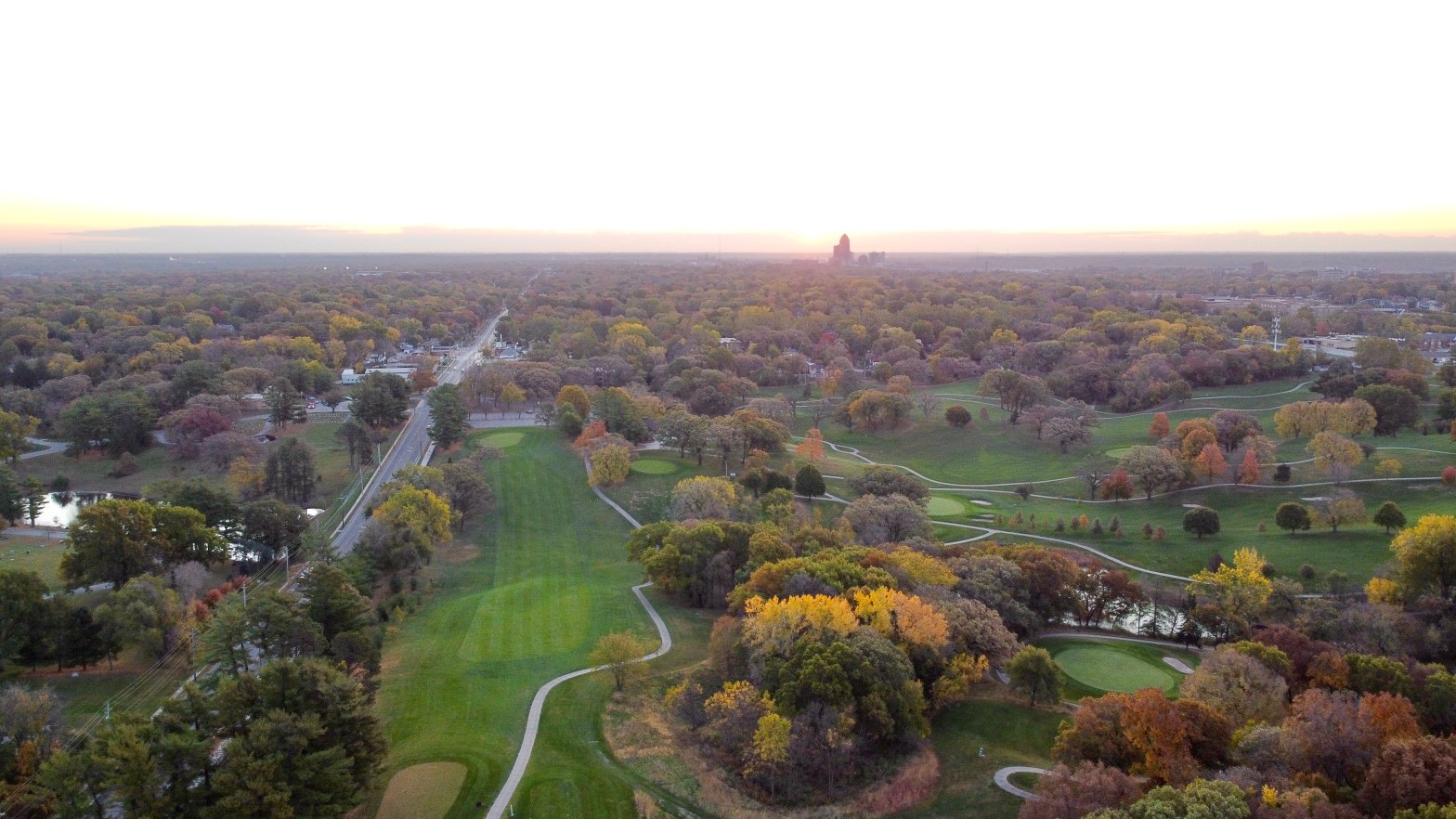
Sometimes, it is hard to see the potential value in something. Every year, thousands of entrepreneurs pitch their idea and hope that curious investors see the potential value in their business idea. To the entrepreneurs, they are trying to show that the core of their idea and business is valuable, even if the details aren’t sorted out and the edges are a little rugged. Likewise for me, I try to see the potential value in every golf course that I get the opportunity to play. Sometimes I play courses where the value is abundant and evident such as The Links at Lawsonia (See the previous blog post for more information on Lawsonia) and sometimes I play courses where I need to rack my brain continually to see what potential value that course possesses. This past week while I was on the road, I had the privilege to play a round at Waveland Golf Course with an old college friend. With Waveland, the actual value of this piece of property immediately presents itself as soon as you pull into the parking lot. From there, you see a giant valley that is the fairway on hole number 9 and south of that, through the assortment of trees, you can see the rolling landscape that characterizes the rest of the property. Now before we go any further, you may recognize Waveland from the series premiere of the hit YouTube show, Strapped, produced by No Laying Up. This is not meant to over shadow that video, rather I want to focus less on Icarito missing his flight and more on this beautiful piece of property and teach you something about golf in my stereotypical concise format.
Waveland Golf Course is the oldest municipal golf course in Iowa opening in 1901. Located less than 4 miles from downtown Des Moines, this property features giant rolling hills that double as sledding hills for the locals in the winter. These immense hills make for exciting blind shots and for all around fun grounds for playing golf. Coupled with the rolling hills, Waveland can also be categorized by outstanding greens that roll so fast, that I was honestly caught off guard for the first 4 or 5 holes. Just like the blind shots and hills these greens were insanely fun to play on. In addition to being a fun course, Waveland is widely affordable to the public, I played during the weekend where it was only $26 to walk. Generally when courses are under $30, it means the course is an executive course or on a boring piece of land, Waveland Golf Course is neither of these things. Being from St. Paul Minnesota, there are not a lot of courses in my immediate area that advertise this low of a price. The crappiest “regulation” municipal golf course that I can think of is still in the neighborhood of $35 on a weekend for walking. This all but props up the unique and special bargain that Waveland is to the general public.
When talking about the course itself, hole number 3 often gets a lot of attention due to the extremely tight tee shot and the quirkiness of the hole. I think there are better holes out there. There are the cool elevation changes on hole 9, the scenic holes that circle the Drake University Observatory (located directly in the middle of the property) and my favorite hole, hole 12. On the surface, hole 12 is not a fascinating hole, tipping out at 565 yards the hole is a double dog leg hole. First your tee shot should favor the left side to avoid the trees on the right. Then you should lay up your second shot as distant and as right as possible to avoid denying yourself an angle to the green with the trees on the left. Finally, you have a wedge shot down a giant slope into a small green. However there is an alternate way to play this hole, you go for the green with your second shot. At first glance, the second shot on 12 seems daunting because of a cluster of trees on the left. As I mentioned earlier, you want to favor the right side of the fairway because a shot in or near the cluster of trees on the left denies you an opportunity to put your next shot on the green.
One alternate route is to aim to the left and hit it as far as you can in hopes of catching this steep slope that funnels towards the green. This is a cool feature that I have never seen on a course before, a slope that runs perpendicular to the line of play making it possible to chase a well struck fairway wood up onto the green. When I played it, I inadvertently deployed this strategy. I tugged a 3 wood slightly left of my intended target line but when I approached the landing zone, I saw my ball directly next to the green. While this was accidental on my end, I think that this strategy offers a fun risk reward challenge that I love in a good golf hole. Take on the left side as much as you want to try and make an easy birdie but be weary, if you are too far left or too short, you will have a tough time making par with the trees hindering your advancement. It is strategic holes like this, coupled with the rolling hills that makes Waveland a unique and awesome golfing experience.
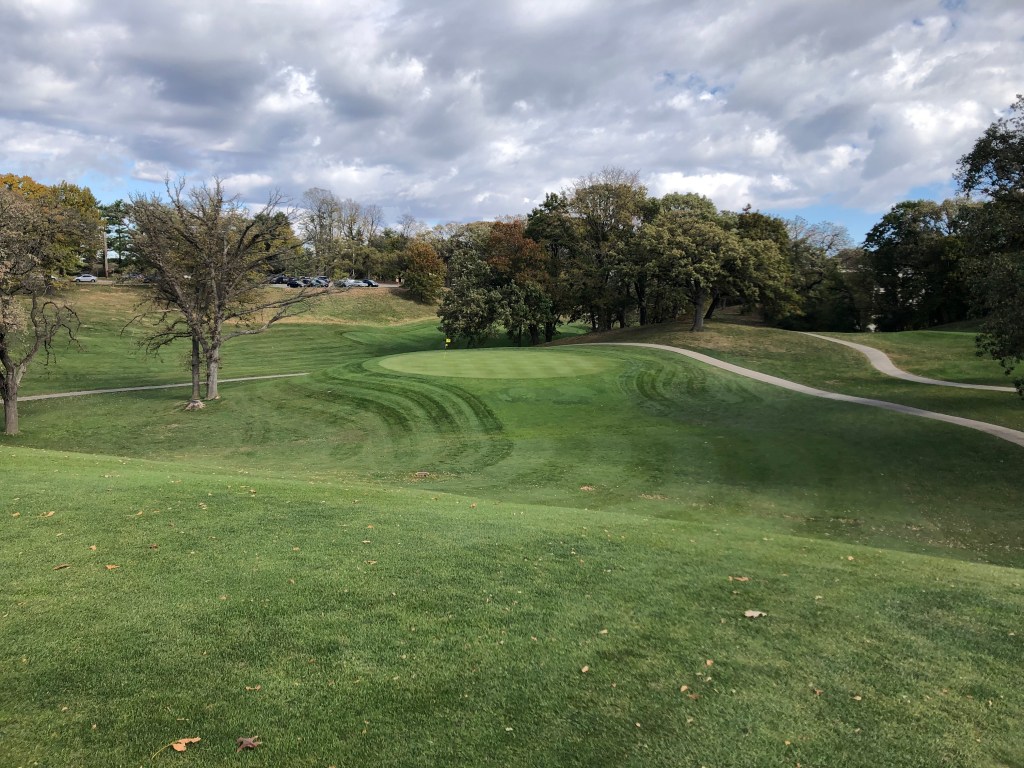
Now that we have talked about the value that Waveland possesses, I want to touch on some of the blemishes. Waveland on the whole has a lot of potential value and unfortunately, just because something has potential value, doesn’t immediately mean that it does have that value. Instead it means the pieces are in place for that potential value to be obtained. While the property has beautiful natural rolling topography that presents immediate value, the most evident restraints on Waveland as a course are the maintenance and the overgrown status of a majority of the trees.
The most minor restraint of Waveland is the maintenance. As was mentioned earlier the greens on this course were honestly some of the best public greens that I have played all year. They rolled fairly fast and were true to the read. If there was anything I would want playable on a golf course it is definitely the greens so Waveland is definitely focusing it’s attention to the right things. That said, there were numerous portions of the property that just seemed abused. There were tee boxes so hard you were unable to tee it up, areas that lacked any vegetation (grass or weeds) which resulted in lies on mud, and areas where hazards have seemed to run rampant. These are items that with just a little more money, would pump Waveland up a level in my book.
However, the more expensive and more necessary improvement in my book is a potential tree removal project. I know that there are courses that are so short that their only defense is tight fairways and restricted landing zones and while Waveland is a short course, I do not think that they need the trees to defend it. To me the greens and elevation alone can defend this course as well if not better than thickets of trees that line a majority of the fairways. From my research, It appears that a lot of the oak trees and other vegetation are native to the land so this would not be a restoration project, rather it would be a project to polish up the course and remove trees that restrict holes differently than than they once did. I have reviewed a lot of trees that I would like to remove or alter but to me, I believe those trees are there for safety precautions so I will not be mentioning any of those trees when talking about adding value to Waveland Golf Course.
The first tree is a tree that guards the front left portion of the 10th green. This tree is parked right in front of the left half of the green. I am not opposed to centerline trees or trees by the greens (I love Keller Golf Course in Minnesota) but without the trees, this hole is tough enough as it is. The 10th hole at Waveland tips out at 243 yards with a tiny green that is perched up on a hill that rejects poor shots on all but one side of the green. To me, removing this tree (and maybe one more on the left portion of the green) doesn’t make the hole much easier and allows for a more playable and enjoyable golfing experience.
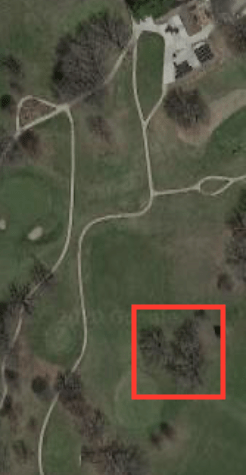
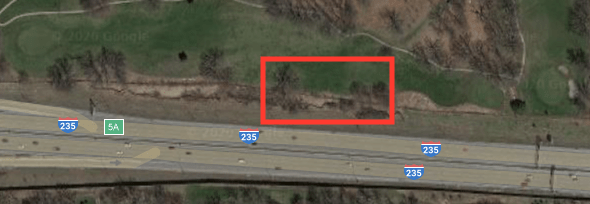
Keeping in the same vein with making the course more playable, I want to look at hole 16. Hole 16 is a long (460 yards) dog leg Par 4 along the interstate and in my opinion, one of the hardest holes on the course. Like most good dogleg holes, there is strategy to your tee shot. The closer you get to the corner of the dogleg, the more risk you take on but leave yourself a shorter second shot. The further you are from the corner of the dogleg, the safer your tee shot is but you will have a more difficult second shot. On hole 16 at Waveland, there is a tree that clearly defends the corner but in addition to that tree, there are a ton of trees that litter the same area only shorter. Removing some of those short trees would not change the difficulty of the hole at all and make finding your ball easier as well as make the course more playable. Without those trees, the tree at the corner still blocks your second shot and the strategy of the hole is not altered at all.
All of these complaints may seem finicky but I bring these up as someone who played Waveland and was astonished at the potential the course had to be extremely great. Without the trees and better conditions to rival other local courses, Waveland in my mind climbs into a new stratosphere of courses that is challenging and fun with the fluctuating elevations and open angles for playability. I truly believe this course could be a Top 10 Course in the State of Iowa given the improvements I listed previously! It was the first time that I walked off a golf course and got excited at how much better it could be with a few changes. That said, if Waveland remained unchanged, it still remains a pinnacle of what city golf should be, fun, cheap and accessible. Waveland as it is today is in the Top 3 municipal golf courses that I have had the privilege to play and if you are from the Des Moines area, you know how special this under the radar course can be. Play Waveland Golf Course!
Thanks for taking the time to read this blog post. Unlike some of the newest blogs (which have featured some writing that I am proud of) this blog in my mind reads differently and at times flows rather oddly. I personally had a really tough time explaining and creating the dichotomy of “this course is really good and I enjoyed the hell out of it” versus “man this course could be really special (Like Top 10 in Iowa) with a few changes”. I hope that this contradiction in ideas was clear and easy to follow. If you liked what you read, I appreciate any feedback (grammatical, factual, disagreeance, agreeance, etc.) at aspoiledwalk@gmail.com. You can also find me on social media (Instagram, Twitter, YouTube, TikTok) @aspoiledwalk. If you like what you read, please consider sharing with a friend or on social media, it helps me out greatly. Thanks again for reading and supporting A Spoiled Walk.
AGWS 22 – Affordable Golden Age Architecture? Yes Please! (Spoiled Walk Open 2020 Recap)

One thing that has been a struggle in my golfing career is finding friends that desire to play golf and are able to play golf as much as me. Prior to this summer I had 3 friends that met this criteria but one of them is gone serving our country and the other is 2 states away leaving me with one person. This past month I was able to organize a group of 8 individuals to commit to a 1 day golf trip for a 36 hole, low ball Stableford event. The event consisted of 4 teams (Two Minnesota teams, Team Chicago and Team Iowa) and ranged from single handicaps to almost 30 handicaps. While the competitive event itself was secondary on the trip, I would be remised if I failed to mention the winners so congratulations to Team Chicago (Paul Van Vliet and Joe Alexander) with a score of 44 points.
The main star of this trip was the course that we played. The 2020 Spoiled Walk Open was held at The Links at Lawsonia, which is located in Green Lake, Wisconsin. Originally opened in 1930, the Langford and Moreau design does a great job and shows off the features that the duo was famous for, giant swales in the land and artificial contours that are unimaginable. Back in the early 1900s, the general design philosophy for golf course architecture was called minimalism. Due to the lack of heavy machinery, golf courses were laid out using the natural contours of the land and tried to violate the landscape as little as possible. This isn’t to say that minimalism architects don’t move dirt, rather they try to limit the amount that needs to be moved for key areas such as greens or areas that need help draining. When Langford and Moreau started to design courses, they leaned into the idea of moving land and given the technology of the time, they used the steam shovel.

The steam shovel was a revolutionary invention that generated mechanical energy from the phase conversation of water to its vapor form, steam. This allowed for crews to move large swaths of material in less time with none of the effort. Steam Shovels are responsible for digging foundations for the first skyscrapers, digging the Panama Canal to improve trading around the world and even used in the iron ore mines in Northern Minnesota. However one downside of the Steam Shovel was its lack of hydraulic controls meaning that instead of gentle and predictable movements, the steam shovel moved powerfully and was very clunky. This means that when Langford and Moreau started using the Steam Shovel to move dirt for their designs, they were left with sharp, dramatic changes in elevation.
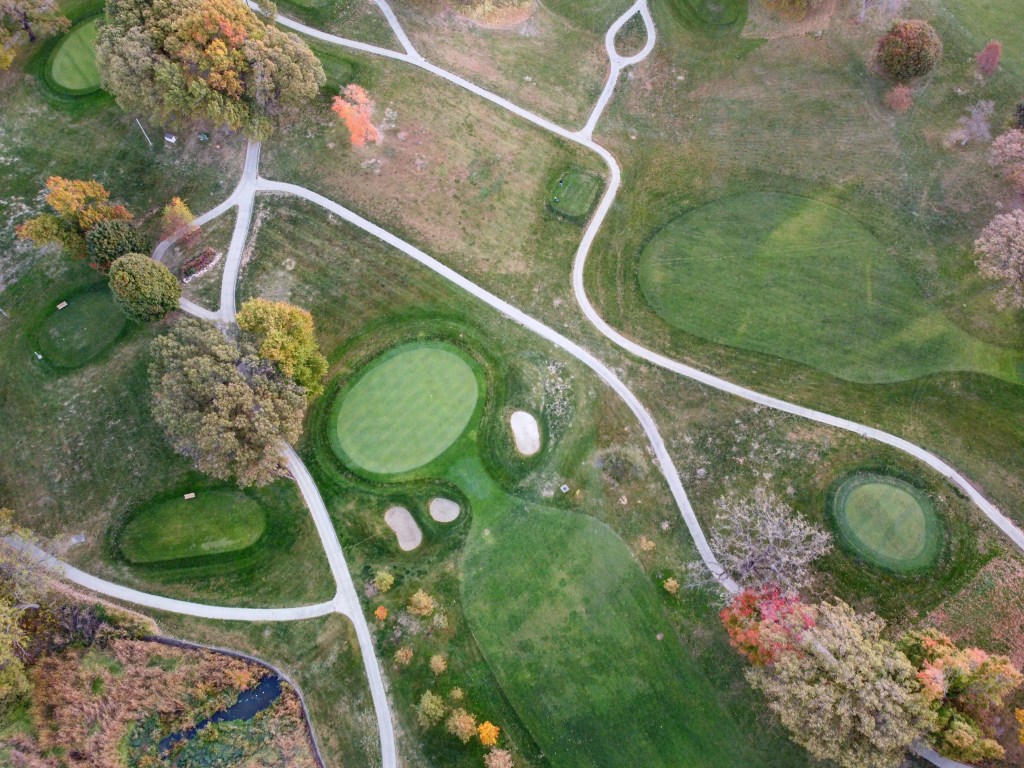
At the Links of Lawsonia, you are smacked right in the face with this phenomenon right on the first hole. The first hole at Lawsonia is a blind tee shot into a dogleg right. It is relatively open so the further left you are, the further your second shot will be into the green and the further right you are, the more you bring a bunker into play but overall, you will leave yourself with a much shorter wedge shot. The real theatrics of the hole occur when you hit into the green. The Green seems fairly benign as it feeds from left to right down to a little flat portion all the way on the right. The real scare of the green is the 30+ Foot drop off on the left side of the green! To make this green complex, the architectural duo pushed all of the dirt from what is now the left side of the green up into a mound that eventually became the green as it is today. The end result is a green that sits atop giant “cliff” urging golfers, if you are going to miss the green, miss the green to the right.
Something else that Lawsonia displays so brilliantly is the use of elevation as a hazard. There are multiple pseudo bunkers in the fairways out at Lawsonia. One specific example is the 5th hole, a relatively short Par 5. If you are laying up at this hole on the west side of the property, you need to be wise on which side of the fairway you aim for and how far your shot goes. Guarding the right side of the green is a tree so if you are on the right portion of the fairway, you need to be far enough back that you are able to hit it up over the tree. If you are too close to the tree you will be forced to a hit a punch shot with a bunker between you on the hole. The left side however is guarded by a giant mound made by the aforementioned “steam shovel duo” and this change in elevation brings in a brilliant piece of strategy. If you want to be left you need to either carry the ball far enough so that you clear the mound or you need to hit it short enough to ensure that you have a level and manageable lie. However, when you are short of the mound, you are left with a blind shot into the putting surface. This is the brilliance of Langford and Moreau and using elevation as a hazard.
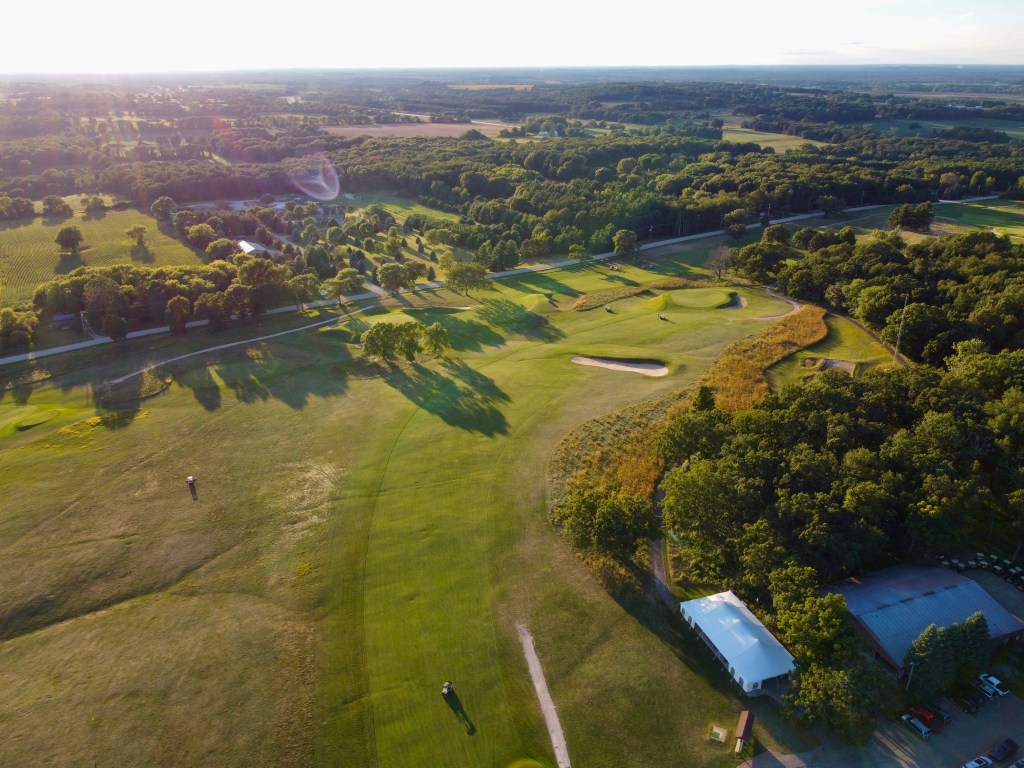
The course has many highlights like the 7th green with a boxcar buried underneath it and a cool signature 13thhole but there is one final highlight I want to specifically point out about The Links at Lawsonia. After wrapping up the front 9, you are faced with the long Par 3 10th. In all honesty, this may be the worst hole on the property but to me, the first time I played this hole, it left me speechless. The long 210 yard Par 3 is basically a bridge in the routing to get you from the west side of the property to the east side. When you wrap up the 10th you pass around the lone tree on the back nine and you find yourself at the crest of a hill. Looking out from there, you see the whole remaining back nine at Lawsonia laid out in front of you. With no trees to interfere with sight lines, you can enjoy the giant undulations made by Langford and Moreau and the natural rolling hills that characterize the back nine. The first time I played here I was stunned at this beauty and was caught just staring at the sprawling landscape.
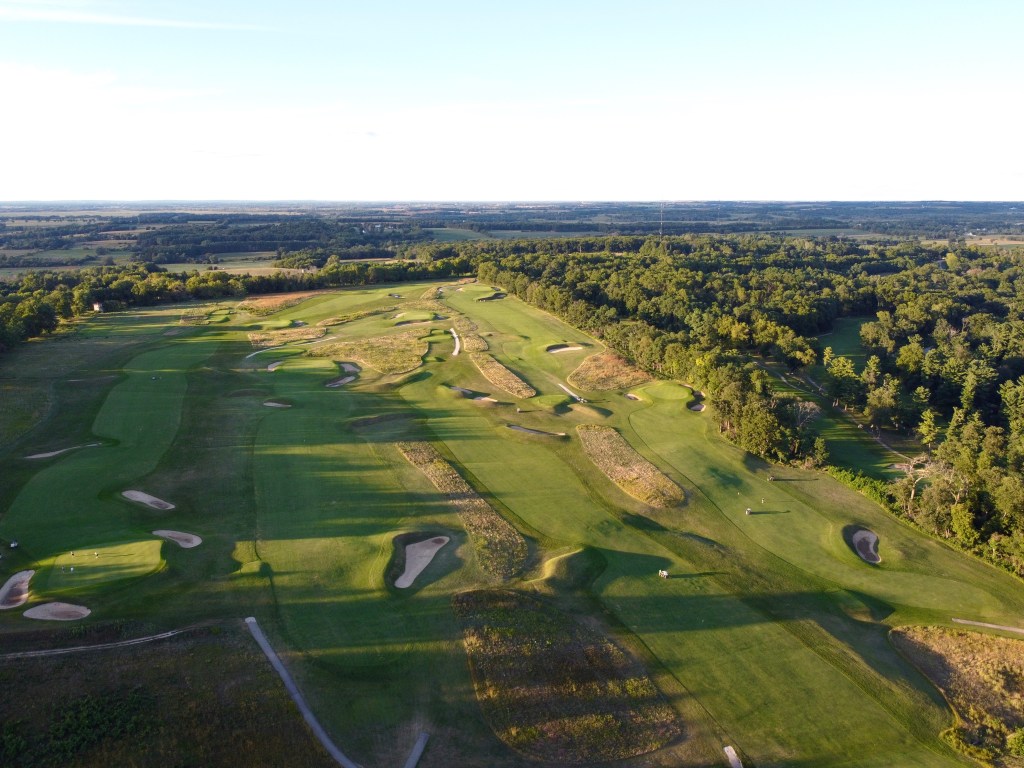
Overall, the Spoiled Walk was a great success. In addition to having a great escape from the long 6 months of Covid Lockdown, a great golf course grew the game by showing a group of “fair weather” golfers how fun, playable and engaging golf can be with a properly designed course. It was fun on the ride home to hear praises ringing through the car about the cool design of the course and how the design allowed for creative shots to be rewarded. The Links at Lawsonia is truly a top course in America that is open to the public. In addition to being a widely affordable public course, it is a beautiful preservation of a golden age design that should be revered as such by the golfing community. If you are ever in central Wisconsin this is a must see.
Thank you for taking the time to read this long overdue blog post about the Links at Lawsonia. If you enjoyed what you read, please share it with your friends and subscribe to the blog. I am looking to continue posts similar to this one where hopefully my enthusiasm for golf shines through. You can find me on Instagram, Twitter and TikTok (@aspoiledwalk) and now you can also find me on Youtube. Below is the first video I made, a small compilation of shots from The Links at Lawsonia. Enjoy the video and thanks again for reading.
AGWS – 21 – Thank You & My First YouTube Video
Hello to all of the readers of the Good Walk Spoiled blog. This past week, I just reached 500 different vistors and readers on my posts last week and that is a crazy achievement to me. When I started this blog, I did it as a creative outlet for my love of the game of golf so to know that this many people have at least taken the time to visit the blog means a lot. Thank you to anyone that has read a post, interacted with me on instagram or twitter and now, to anyone who likes a YouTube video.
That is correct, I just posted my first Youtube video! Earlier this year, many readers and followers know that I purchased my first drone. It has been an absolute joy learning how to fly that thing and use it to capture cool angles of golf courses. In a future blog post I plan on going over a trip from last month to The Links at Lawsonia, a famous course located in Green Lake Wisconsin. In the mean time, I hope that you enjoy the Youtube Video and the footage that I got from that trip. Admittedly this video is far from perfect but I learned a lot editing it and look forward to continuing to get better at creating video content for you guys. Enjoy the video!
Thanks again for all of the support and if you like the content and blogs, It would mean a lot if you shared them with your friends and followed me on Twitter, Instagram and TikTok (@aspoiledwalk).
These Are the Only Two Putting Drills You Will Ever Need
From a technical standpoint, I know that my Golf game is not very sound. My swing has a lot of moving parts and I do not know exactly how far I hit every club. Instead, over the years my game has sort of developed into a “feel” game. I select clubs based on how I want to swing given a certain yardage and my unconventional chipping is all touch oriented.
One reason that I think my game is like this is my focus on putting. Growing up, I did not want to pay for driving range tokens, instead I could hit as many putts and chips as I wanted for free. This monetary incentive as well as my Grandpa preaching the gospel of the short game growing up made me a putting connoisseur. This relentless grind on the putting green has stuck with me to this day as you are more likely to find me on a putting green then a driving range any day of the week. With putting being a giant feel and touched base skill, it is easy to see how that mindset has bled into other parts of my game such as my swing.
I wouldn’t by any means consider myself a putting master but due to my practice, it is easily the strongest part of my game. There are times when my putting actually completely bails out the rest of my game when I am playing poorly. When I practice putting I really only ever do 2 drills and I thought that I would share them with you guys. Hopefully you’d find them helpful as well.
3-4-5
Three, Four, Five is a drill that is meant to help anyone build confidence in short putts and hopefully cure anyone that has the yips. To do this drill, all you need is a ball, a target/golf hole and a tee. What you are going to do is find a relatively flat putt by a hole and put the tee in the ground about a putters length away from the hole. Since most putters tend to be around 36″, you just measured off a flat 3 foot putt. The goal is make 10 putts in a row and after you make 10 in row, make the putt about a grips length longer. This new putt is approximately 4 feet. After you make 10 in a row from 4 feet, go one more grips length away and make 10 five footers in a row. Once you made 10 in a row from each spot, you have completed the drill.
To many high (and even low) handicap players miss numerous putts at this range. Putts at this range are crucial to lowering scores and taking your game to the next level. Once you are comfortable with this drill you can spice it up but trying this with a breaking putt or even trying to make 20 in a row from each spot rather than 10. Do not get frustrated. This drill on the surface may seem easy but I think that it will present more of a challenge then you are expecting.
Give It a Chance
I cannot take full credit for this drill. After struggling with lots of putts in the 15-30 foot range this summer, I happened to stumble onto a Golf.com drill that was supposed to help with your lag putting. I made some adjustments and added some criteria to make a game out of it. I have been doing this drill for about 3 weeks and I have already seen the results of it improving my scores.
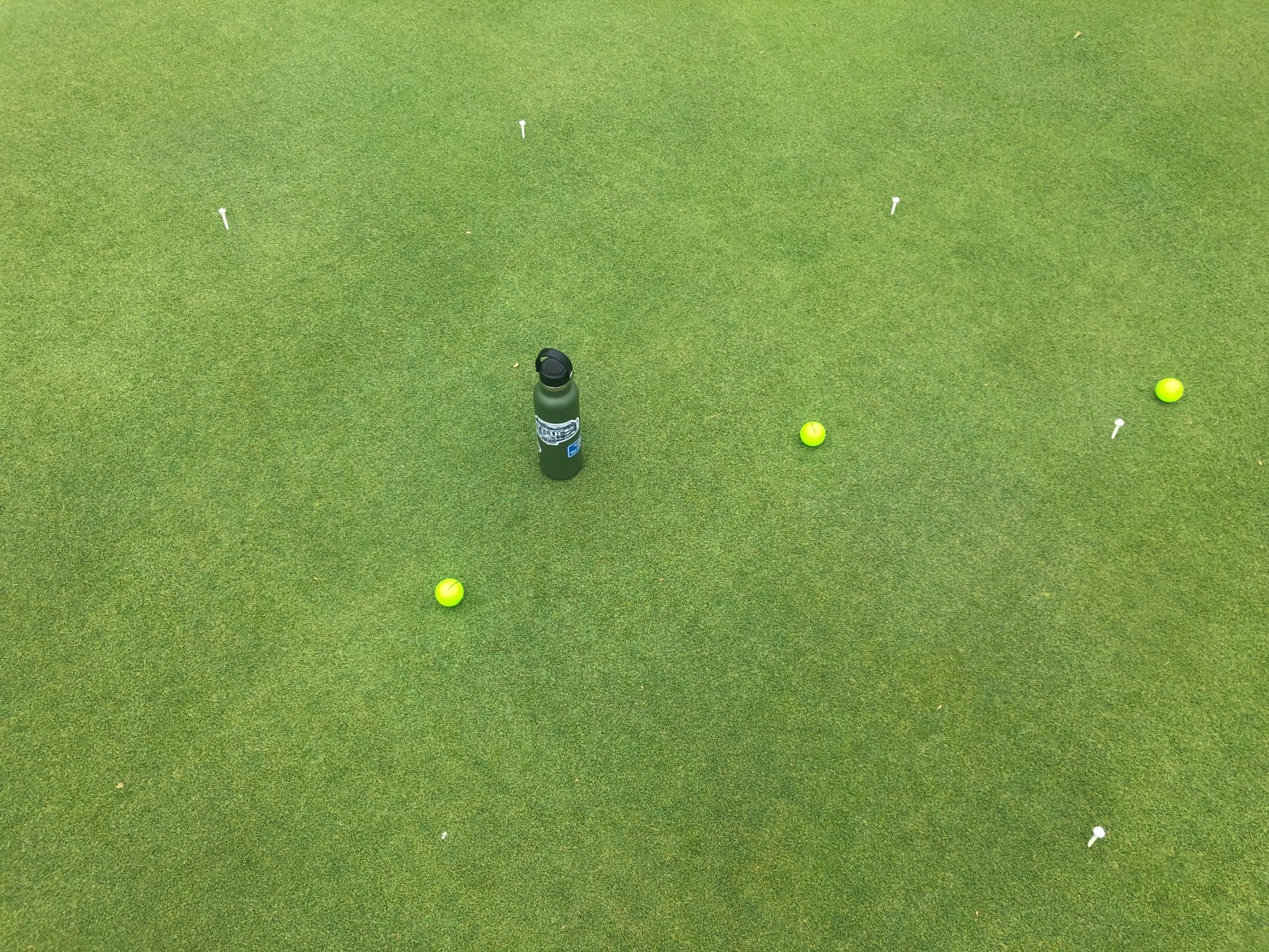
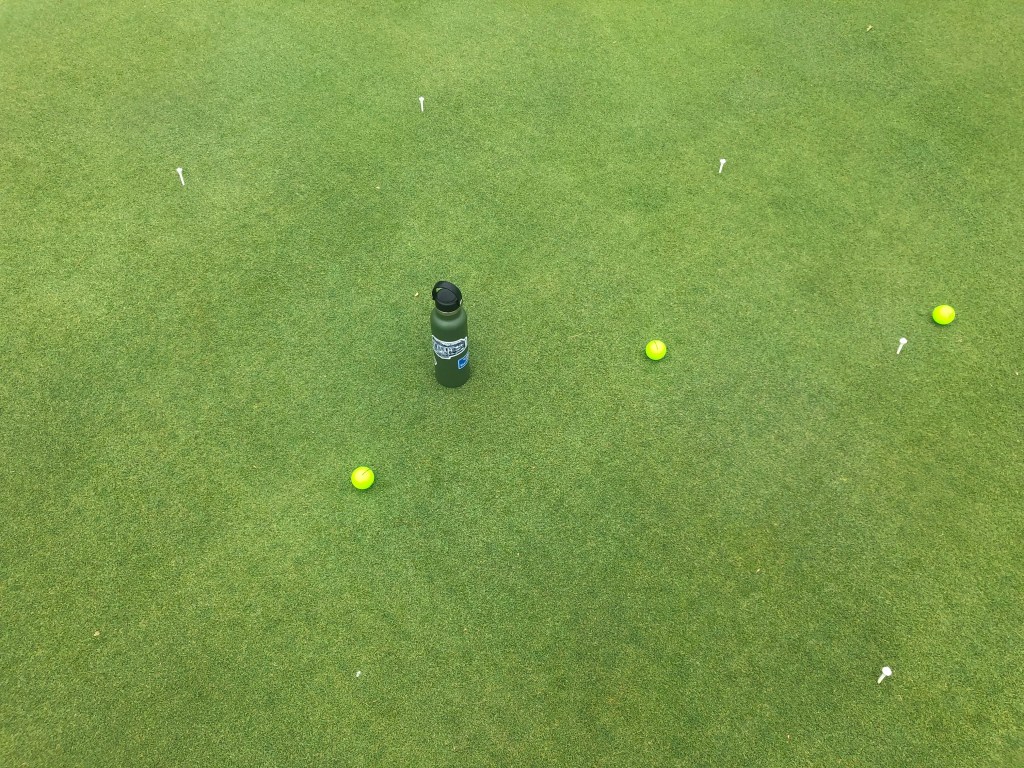
To do this drill you will need 3-5 golf balls, 6 tees and a hole/target. Around the golf hole make a semi circle using 5 of the tees. These tees should be about a putters length away from the hole giving you a 3 feet radius around half of the hole. On the opposite side of the hole, mark of 20 feet (approximately 7 putter lengths) and put your last tee into the green.
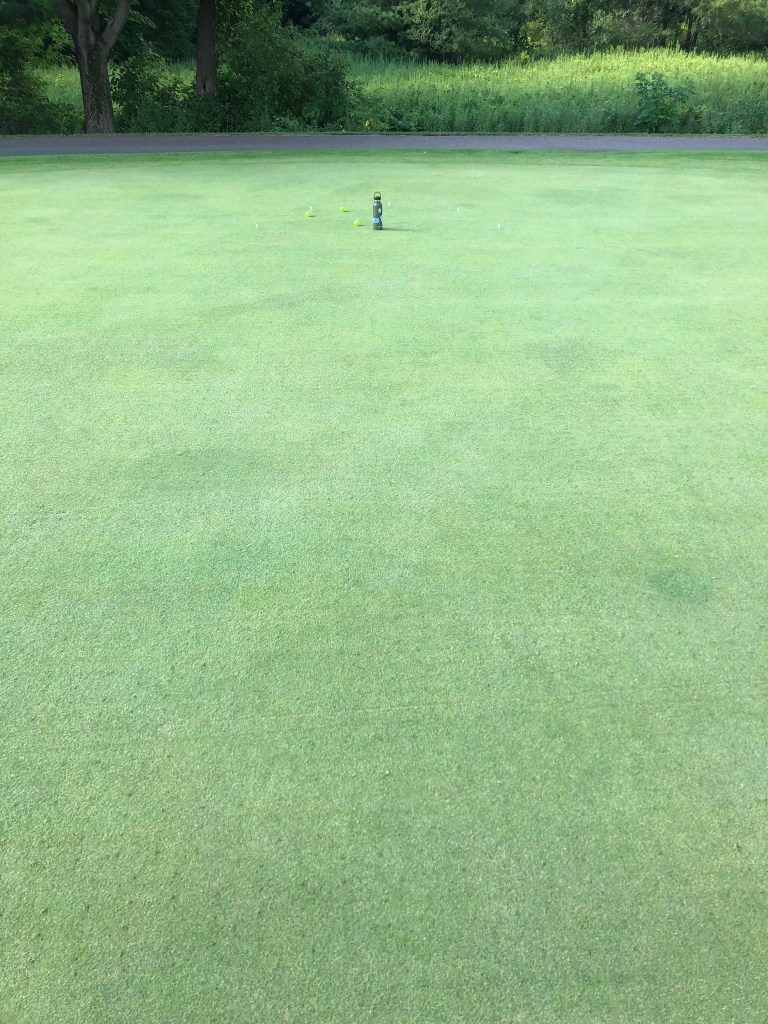
Now this drill is working on your lag putting, more specifically, your lag putting while still giving putts a chance to go in. You are going to roll putts towards the hole. You want your putt to either go in the hole or if it misses the hole, you want it to land in the semi circle of tees you have made. If the putt is short of the hole or ends up outside of the semi circle the putt is no good. See how many in a row you can get to either go in the hole or end up in the semicircle. After 10-15 minutes of this, you will start to feel yourself getting dialed in on the speed and understanding your lag putting more. The real round implications of this drill is that when you are faced with a longer putt, you give the putt enough speed to go in but not so much that you leave yourself an long tester coming back. With those long second putts, you tend to have more 3 putts and hence higher scores. This drill will lower your score, guaranteed.
I hope that these drills help you and I would like to hear your feedback on these drills and if there are any other drills that you do that I should know about. Thank you for reading this post. If you liked these drills, I would encourage you to share this with your golf friends and help them get better. Additionally if you liked what you read, check me out on Twitter, Instagram or Tiktok (@aspoiledwalk).
The Weekly Preview – 5 – The Land of 10,000 Water Hazards: The 3M Open

How awesome was it to watch golf last week at the Memorial? With the tough conditions and the set up of the course, we saw a true test of skill last week that baffled beefy Bryson and made shot makers shine such as John Rahm and Matthew Fitzpatrick? This week will be a tough follow for my home state as the PGA Tour takes on the TPC Twin Cities. What a difference a year makes. Last year, my friend, a 3M employee, got us free tickets and we followed Matthew Wolff around Round 3 watching him shoot an effortless 62. This year, PGA events are without fans and we are all stuck at home in midst of a global pandemic. Lets hope TPC Twin Cities gives us the entertaining “birdie-fest” it gave us last year.
The Tournament:
The first 3M Open was last in 2019 and was originally called the 3M Championship, a regular stop on the Champions Tour for over 26 years. The event was originally at nearby Bunker Hills and after 8 years was moved to a then, 1 year old TPC Twin Cities. With 3M taking over as the main sponsor in 2001, the tournament pot grew and attendance flourish until it blossomed into a full blown PGA Tour stop last year. The only 3M winner is Matthew Wolff but other stars such as Bernhard Langer and Kenny Perry (who won the 3M Championship 3 different times) won the event when it was called the 3M Championship.
The Course:
TPC Twin Cities, located north of Minneapolis and St. Paul in Blaine, was opened in 2000. It was originally designed by Arnold Palmer in cooperation with Minnesota native and legend, Tom Lehman. In 2018, with the announcement of the 3M Championship turning into the 3M Open, Lehman worked some updates to the course including longer tee boxes as well as repositioning some bunkers. The course is a Par 71 for the PGA tour at 7,169 Yards (75.4/143).
The Field:
Matthew Wolff is returning to Minnesota to defend his first PGA Tour victory, the 3M Open. Last year he was able to fight off fellow young and rising stars Bryson DeChambeau and Collin Morikawa who both have won on tour this year already. However given the relatively strong fields that we have seen on tour, this field is relatively weak. But don’t let that deter you from watching, last year this event surrendered the most under par scores on tour. That means Matthew Wolff, Tony Finau and other big hitters should be lighting up the scoreboard.
My personal picks this week are Will Gordon and Tony Finau. I know that Finau at this point needs to be talked about in how poorly he chokes away some leads, but the dude can flat out play and is due here. Additionally Will Gordon is 8th in GIR on tour this year. Hitting Greens in Regulation is never a bad thing.
 A Good Walk Spoiled